
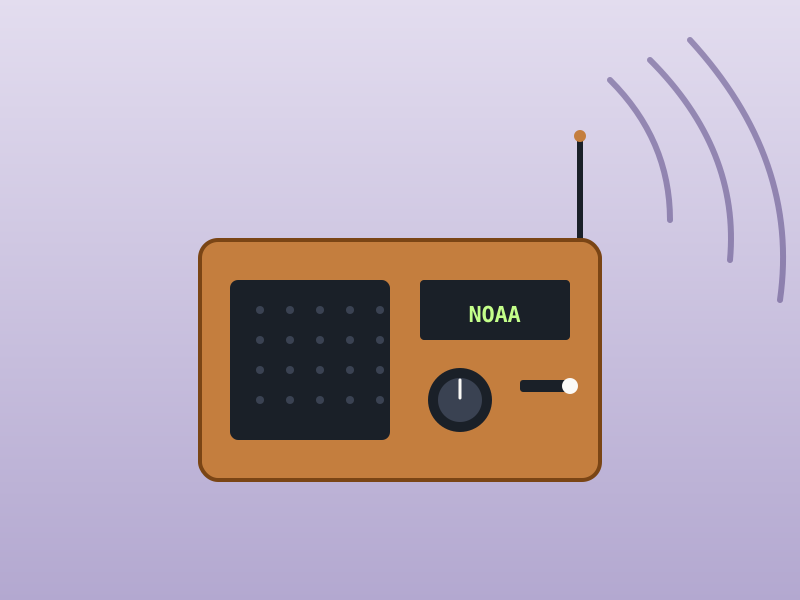
Communication: when the cell tower goes down

During big storms and regional emergencies, cell networks routinely overload or lose power. A $30 hand-crank radio and a simple family check-in plan are more valuable in that moment than any phone upgrade.

Heads up: Some links below are affiliate links. If you buy through them we may earn a small commission at no extra cost to you. Full disclosure →

What "communication prep" actually means

It splits into two questions:

  1. How do I get information from outside? (Weather alerts, local emergency broadcasts, power-restoration updates.)
  2. How does my family stay in touch when cell service drops? (Pre-agreed check-in times, SMS fallback, out-of-state contact, short-range radios.)

The family check-in plan

Write this down and tape a copy inside each kid's backpack. The entire plan is four lines:

  • Meet at: [nearby spot if home isn't safe]
  • Backup meet at: [spot farther from home]
  • Call/text: [one out-of-state relative — long-distance calls often work when local don't]
  • SMS first — texts go through when voice won't.
Hand-crank NOAA weather radio with solar panel.
Best overall

Midland ER310 Hand-Crank / Solar NOAA Radio

AM/FM, NOAA weather channels with alert tone, USB charge-out for phones. Hand-crank for when batteries die.

Pros

  • Crank + solar + USB input — three ways to power it
  • S.A.M.E. alerts for your exact county
  • Doubles as phone charger and flashlight

Cons

  • Solar panel is supplemental, not primary
  • Cranking works best in short bursts
Pair of FRS/GMRS walkie-talkies.
Best family comms

Midland / Motorola FRS Walkie-Talkies (pair)

License-free 2-mile range in a neighborhood. Lets parents call kids home without cell service.

Pros

  • No FCC license needed (FRS channels)
  • USB-rechargeable, holds charge for days
  • Kid-friendly controls

Cons

  • Marketed range is optimistic — assume 1–2 miles real-world
  • GMRS channels on same device need a $35 FCC license
Satellite messenger device.
Advanced · Off-grid messaging

Garmin inReach Mini 2 Satellite Messenger

Two-way text and SOS worldwide, even when cell networks are completely down. Subscription required.

Pros

  • Works anywhere with a view of the sky
  • SOS button tied to 24/7 rescue coordination
  • Pairs with phone for easier typing

Cons

  • Monthly subscription (from ~$15)
  • Overkill unless you're rural or travel remote

Free but easy to overlook

Turn on Wireless Emergency Alerts on every phone in your household (Settings → Notifications → Emergency alerts). Bookmark your local county emergency management page. Follow your local utility and National Weather Service office on X and Bluesky — they post restoration updates directly.

Related reading